
The use of AI is not optional in SaaS anymore; it has become an integral part of the development, marketing, and scaling of any modern product. The right AI tools can save your company time by automating processes and help with more informed decisions by providing valuable insights into your business.
This article features the most effective AI tools for SaaS companies, organized based on their application within the tech stack, to help you choose the right ones.
Why Use AI tools for SaaS Businesses
AI tools are no longer just a competitive advantage; they’re quickly becoming a necessity for SaaS businesses that want to scale efficiently. As products grow more complex and customer expectations rise, relying solely on manual processes can slow down innovation and limit growth. AI helps bridge this gap by automating repetitive tasks, enhancing decision-making, and enabling teams to focus on high-impact work. Here, AI Agent Development Services can be helpful for your project.
Some of the core benefits of using AI Tools for Businesses are as follows:
- Faster execution: Automate development, content, and workflows to ship features quickly
- Better decisions: Use AI insights for lead scoring, forecasting, and churn prediction
- Cost efficiency: Scale operations without significantly increasing team size
- Automation: Reduce manual work across marketing, sales, and support
- Personalization: Deliver tailored user experiences and smarter onboarding
- Growth acceleration: Optimize funnels, improve conversions, and boost retention
Best AI Tools for SaaS Businesses
The SaaS landscape is evolving rapidly, and AI is at the center of that transformation. What once required large teams and long development cycles can now be achieved faster and more efficiently with the right AI-powered tools. From building smarter products to automating marketing, sales, and support, AI is helping SaaS businesses operate with greater speed, precision, and scalability.
In this collection, we’ve curated the best AI tools for SaaS businesses to help you build, grow, and scale smarter, along with insights from an AI SEO company to improve your online visibility. Whether you're an early-stage startup or an established SaaS company, these tools can give you a competitive edge by streamlining operations, unlocking new opportunities, and enhancing your online presence with the Uitly Bio Link Builder. For businesses looking to discover and compare SaaS solutions, platforms such as G2, Capterra, and SaaSAdviser can help them explore relevant software options.
Ctrlops - AI-Powered Server Management Tool
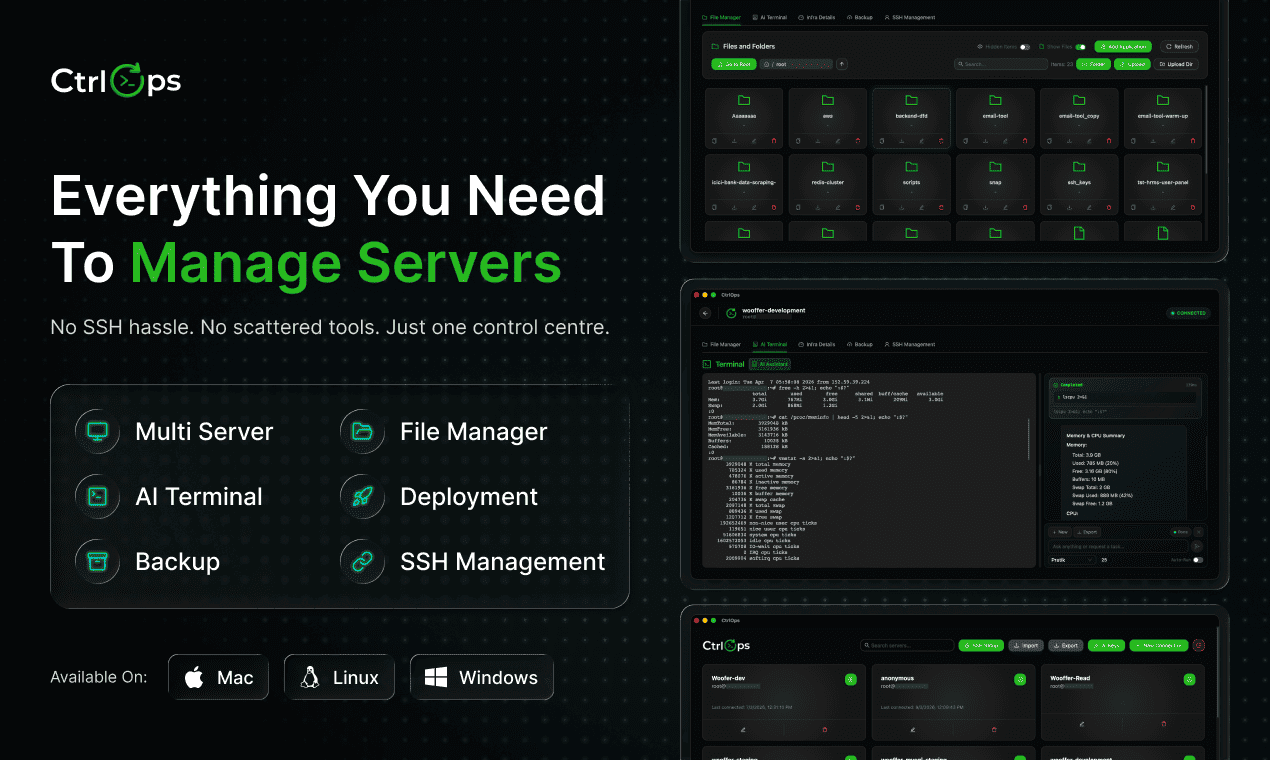
CtrlOps is an AI-powered DevOps workspace designed to simplify server management and deployments. It combines an AI terminal, file manager, and infrastructure monitoring into a single interface, allowing teams to manage multiple servers without switching tools. Its natural language-to-command system lets users describe tasks instead of memorizing complex commands.
For SaaS teams without dedicated DevOps engineers, CtrlOps significantly reduces operational complexity. It enables faster deployments, real-time monitoring, and easier debugging, helping teams manage infrastructure efficiently while saving time and minimizing errors.
Key Features:
- AI-powered terminal with natural language commands
- Unified interface for server, files, and monitoring
- Local-first security (no credential exposure)
- Approve-before-execute safeguard for commands
- Multi-server management in one workspace
Ideal Use Cases:
- SaaS startups without dedicated DevOps teams
- Managing multiple servers and environments
- Automating deployments and routine operations
- Debugging and monitoring infrastructure in real-time
- Reducing manual DevOps workload and errors
shadcn/studio AI MCP Builder
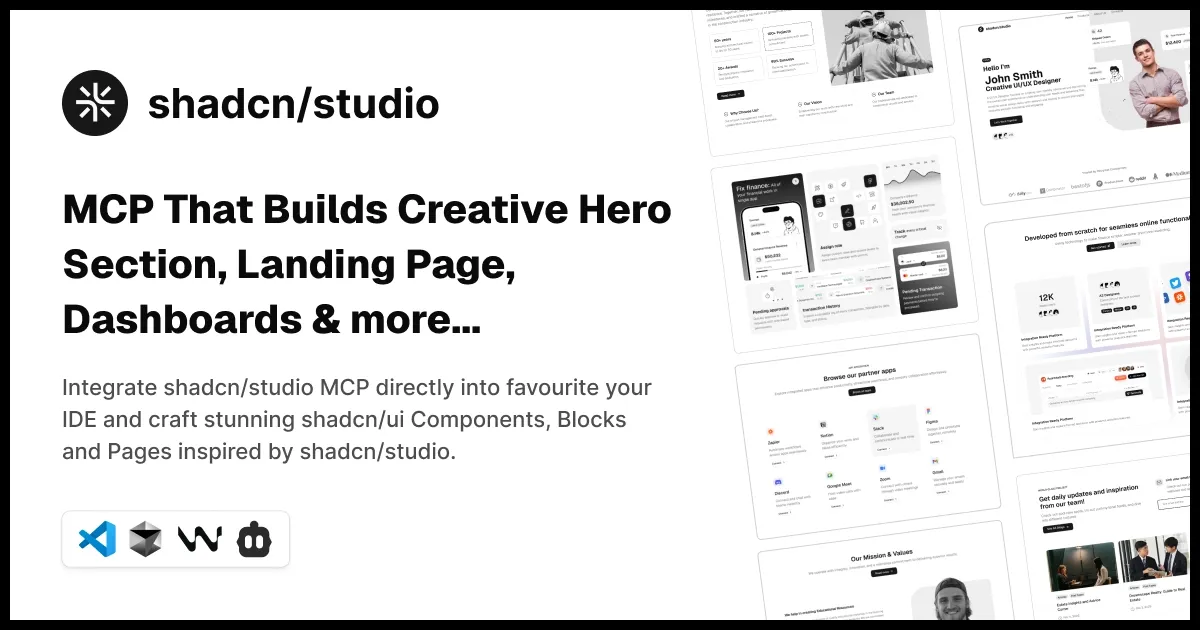
Shadcn Studio offers a developer-first AI builder designed around MCP (Model Context Protocol) to connect UI, data, and AI workflows seamlessly. It helps SaaS teams create production-ready AI interfaces without heavy backend complexity. Shadcn Studio's Shadcn AI Builders provides a great relief in executing the most catchy UI.
What makes it particularly valuable for SaaS teams is its ability to convert ideas into production-ready UI quickly, without reinventing the architecture every time. Developers can plug in the Shadcn component, and Shadcn Blocks connect data sources and orchestrate AI behavior, all within a unified workflow. It’s especially useful when building AI-native features like copilots, assistants, or smart dashboards.
Key Features:
- MCP-based AI workflow building
- Prebuilt UI + component integration
- AI-to-design + AI-to-code pipelines
- Developer-friendly customization
Ideal Use Cases:
- SaaS product teams building AI features
- Internal tools with AI workflows
- Rapid prototyping of AI-powered UI
You can also consider ready-to-use Shadcn Templates for SaaS, such as the Flow Shadcn SaaS Template.
FlyonUI AI MCP Builder
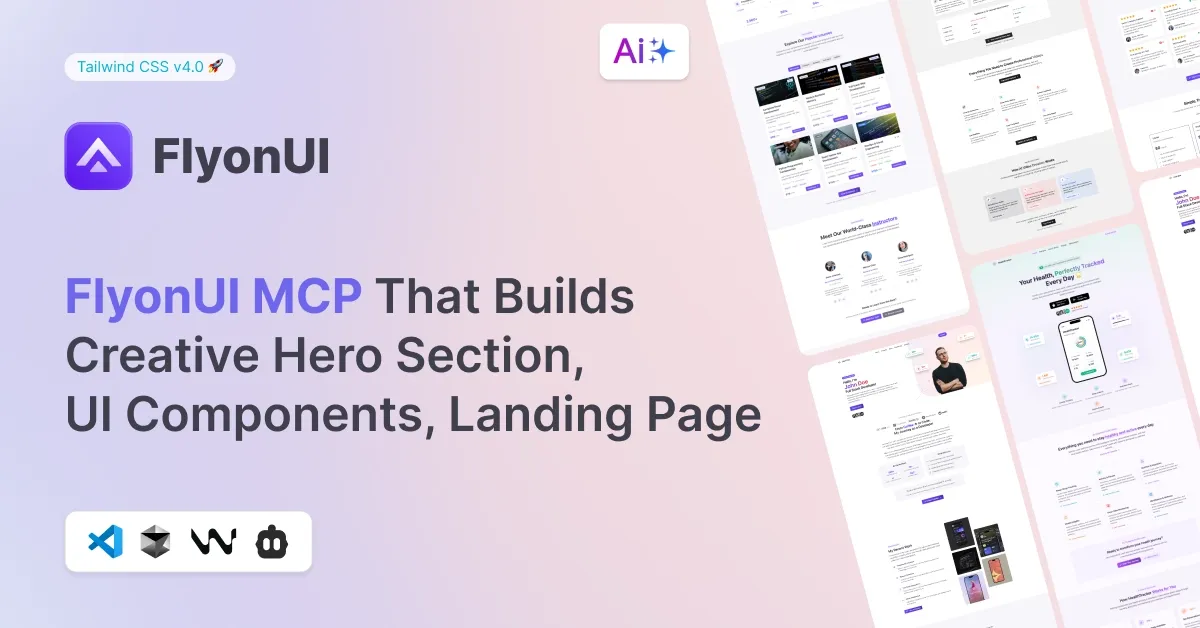
FlyonUI focuses on AI-powered UI generation with MCP integration, making it easy to design and deploy AI-enabled interfaces quickly. This Tailwind AI Builders is the go-to tool for anyone who is working on Tailwind projects for their SaaS business.
The platform shines in scenarios where rapid iteration is critical. Instead of spending hours designing layouts or wiring up Tailwind components and Tailwind Blocks, teams can generate and refine UI in minutes. Its MCP integration ensures that AI-generated interfaces are not just static designs but are connected to real workflows and data. This makes it ideal for tailwind templates, admin panels, and customer-facing SaaS products.
Key Features:
- AI-driven UI generation
- MCP server integration
- Tailwind + modern frontend support
- Prebuilt components for faster shipping
Ideal Use Cases:
- Frontend-heavy SaaS products
- AI dashboards and admin panels
- Designers transitioning to AI-powered workflows
You can also consider using ready-to-use Tailwind SaaS templates.
Salesforce Einstein
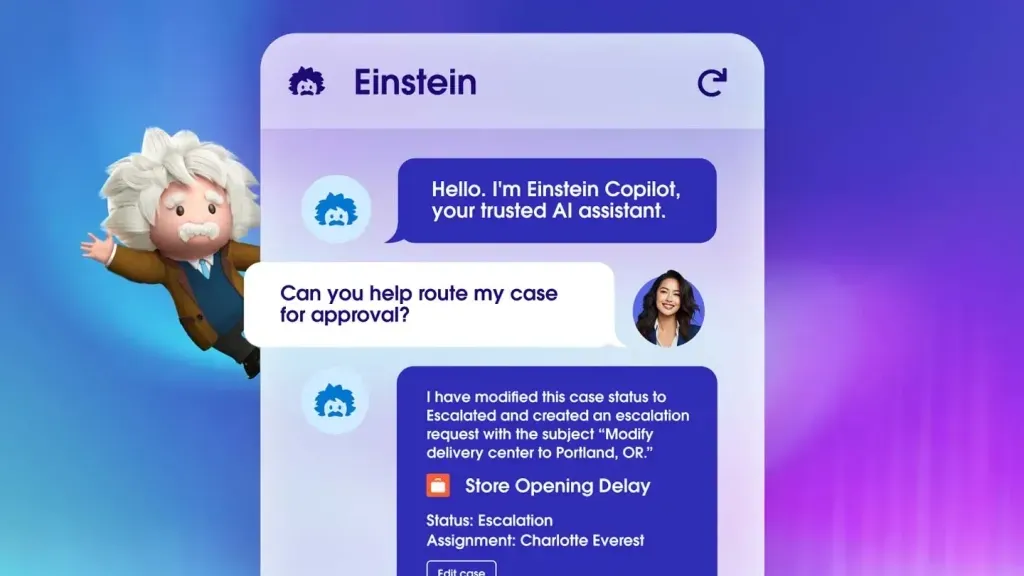
Salesforce brings powerful AI capabilities directly into the CRM environment, turning raw customer data into actionable insights. It analyzes historical and real-time data to predict which leads are most likely to convert, how deals will progress, and where risks exist in the pipeline. This level of intelligence helps teams prioritize efforts more effectively.
For SaaS businesses with large sales operations, Einstein reduces guesswork by automating forecasting and surfacing recommendations. Instead of relying on manual analysis, teams can make data-driven decisions at every stage of the funnel. Over time, this leads to improved conversion rates, more accurate revenue projections, and better alignment across sales and marketing teams.
Key Features:
- Predictive lead scoring
- Sales forecasting & automation
- AI-powered recommendations
- Workflow automation inside CRM
Ideal Use Cases:
- Enterprise SaaS with large sales pipelines
- Data-heavy CRM environments
- Revenue forecasting and pipeline optimization
➡️ AI in CRMs enables predictive scoring, automation, and smarter decision-making across sales workflows.
HubSpot Breeze
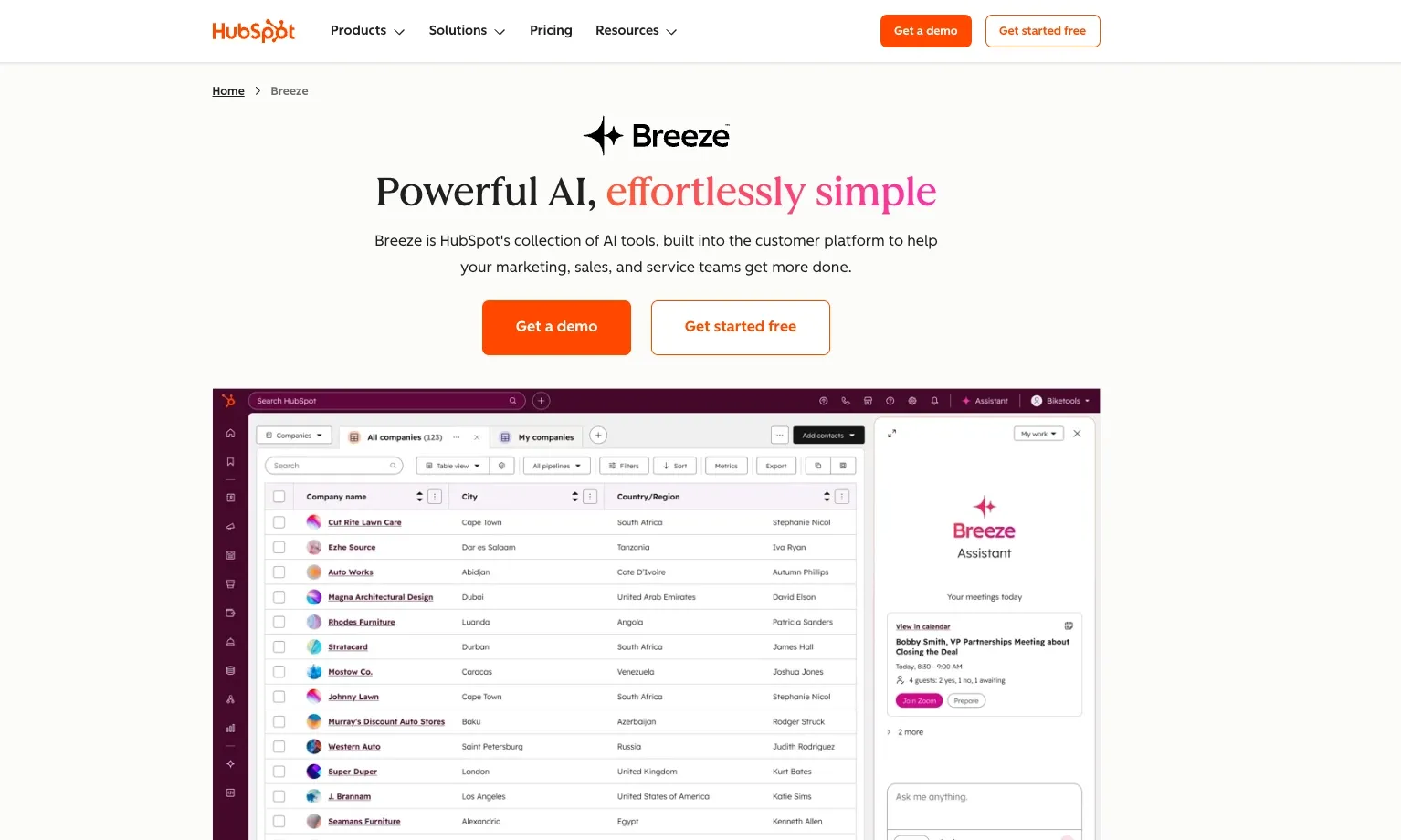
HubSpot Breeze acts as an AI-powered layer across the entire HubSpot ecosystem, connecting marketing, sales, and support workflows. It doesn’t just generate content—it understands customer context, intent, and lifecycle stage to provide more relevant outputs. This makes campaigns and outreach feel more personalized and timely.
One of its biggest advantages is how seamlessly it integrates into existing workflows. Teams can generate blog posts, emails, and sales messages while also enriching leads and identifying high-intent prospects. For growing SaaS companies, this reduces the need for multiple disconnected tools and creates a more unified growth engine powered by AI.
Key Features:
- AI content generation (emails, blogs)
- Lead enrichment & intent detection
- Autonomous AI agents for workflows
- CRM-wide contextual insights
Ideal Use Cases:
- Growth-stage SaaS companies
- Marketing + sales alignment
- Inbound and lifecycle automation
For long-form work, there is an AI book writer that turns an outline into full chapters, which is a different job from a paragraph assistant.
➡️ Breeze includes AI agents for content, prospecting, and support automation.
Intercom Fin
Intercom Fin is designed to handle customer support at scale by resolving queries automatically using AI. It can understand context, pull information from your knowledge base, and deliver accurate responses in real time. This reduces the burden on support teams while maintaining a high-quality customer experience.
What sets it apart is its ability to continuously learn and improve based on interactions. SaaS companies with high support volumes can use Fin to handle repetitive queries, allowing human agents to focus on more complex issues. This not only improves efficiency but also ensures faster response times for customers.
Key Features:
- AI chatbot with real-time resolution
- Custom workflows and actions
- Omnichannel support integration
- Tone and response control
Ideal Use Cases:
- SaaS companies with high support volume
- Customer success automation
- Reducing support team workload
➡️ AI support tools can automate up to 80% of routine queries.
Clay
Clay is built for teams that rely heavily on outbound sales and high-quality data. It aggregates and enriches data from multiple sources, helping you build detailed customer profiles and identify the best prospects to target. Instead of working with incomplete or outdated data, teams get a much clearer picture of their audience.
What makes Clay powerful is its flexibility in creating custom workflows. You can automate prospecting, track intent signals, and sync enriched data directly into your CRM. For B2B SaaS companies, this translates into better targeting, higher response rates, and more efficient sales processes. It essentially turns data into a competitive advantage.
Key Features
- Automated data enrichment
- Intent signal tracking
- CRM data syncing
- Custom workflows for prospecting
Ideal Use Cases
- Outbound sales teams
- B2B SaaS lead generation
- Account-based marketing (ABM)
➡️ Data enrichment tools help identify high-fit prospects and buying signals.
Devin
Devin represents a shift toward autonomous software development, where AI can handle complex engineering tasks end-to-end. It can plan features, write code, debug issues, and even deploy applications with minimal human input. This significantly reduces the time required to move from idea to execution.
For SaaS teams, this means faster iteration cycles and the ability to experiment more freely. Developers can focus on high-level architecture and strategy while Devin handles repetitive or time-consuming tasks. Although it’s not a complete replacement for engineers, it acts as a powerful multiplier for productivity.
Key Features:
- End-to-end code generation
- Debugging and testing automation
- Task planning and execution
- Multi-step engineering workflows
Ideal Use Cases:
- Engineering teams scaling quickly
- MVP development
- Automating repetitive coding tasks
Zapier Central
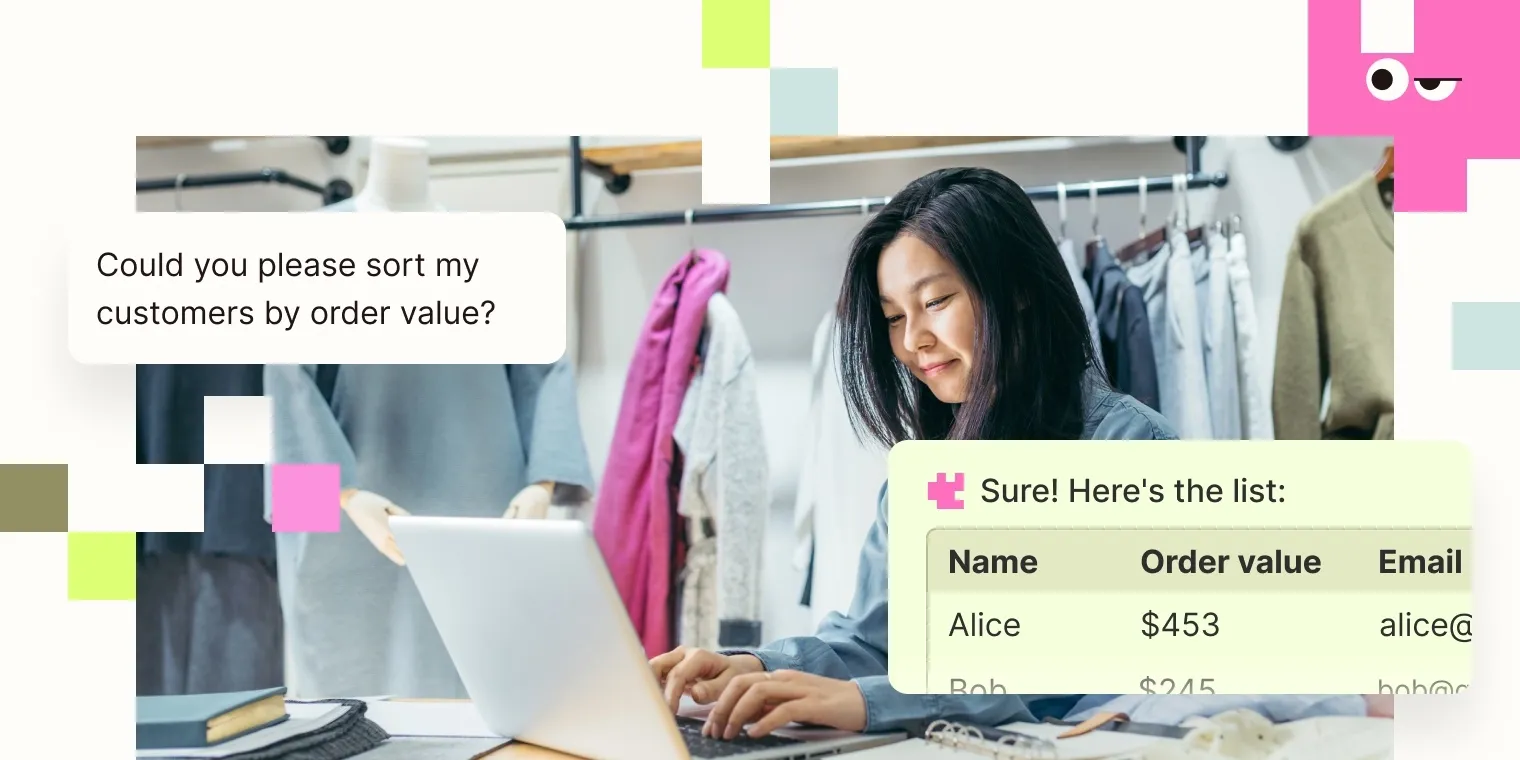
Zapier Central extends traditional automation by introducing AI-driven workflows that can operate across thousands of applications. Instead of manually connecting tools, teams can create intelligent workflows that trigger actions based on data, events, or user behavior.
This is particularly useful for SaaS businesses that rely on multiple tools for operations, marketing, and customer management. Zapier Central reduces manual work by automating repetitive tasks and ensuring data flows smoothly between systems. Over time, this leads to more efficient processes and allows teams to focus on higher-value activities.
Key Features:
- No-code automation workflows
- AI agents performing tasks across apps
- 8,000+ integrations
- Prebuilt automation templates
Ideal Use Cases:
- Non-technical SaaS teams
- Workflow automation across tools
- Ops and growth automation
➡️ Zapier enables cross-app automation using triggers and AI agents.
Gong

Gong focuses on unlocking insights from customer interactions, particularly sales calls and meetings. It records, transcribes, and analyzes conversations to identify patterns that influence deal success. This helps teams understand what top performers are doing differently and replicate those behaviors.
Beyond coaching, Gong also provides visibility into pipeline health by flagging risky deals and highlighting opportunities. This allows managers to intervene early and guide teams more effectively. For SaaS companies with sales-driven growth, Gong becomes a critical tool for improving win rates and building a more predictable revenue engine.
Key Features:
- Call and conversation analysis
- Deal risk prediction
- Sales coaching insights
- CRM integration
Ideal Use Cases:
- Sales-led SaaS companies
- Revenue operations teams
- Coaching SDRs and AEs
➡️ Conversation intelligence tools extract insights from sales interactions.
Notion AI
Notion AI transforms your workspace into an intelligent knowledge hub where information is easy to create, organize, and retrieve. It can summarize documents, generate content, and extract actionable insights from notes, making it a powerful tool for internal collaboration.
For SaaS teams, this means less time spent searching for information and more time executing on ideas. Whether it's product documentation, marketing plans, or meeting notes, everything becomes more accessible and actionable. As teams grow, Notion AI helps maintain clarity and alignment across departments.
Key Features:
- AI writing & summarization
- Knowledge base search
- Task extraction from notes
- Workspace-wide intelligence
Ideal Use Cases:
- SaaS teams managing documentation
- Product + marketing collaboration
- Internal knowledge management
➡️ Notion AI can summarize, organize, and retrieve context across workspace data.
Final Takeaway
The real advantage of AI tools for SaaS businesses lies in how you combine them strategically, not just which ones you use. By integrating tools across product, growth, operations, and support, you create a system that compounds efficiency and scalability.
As AI continues to evolve, SaaS companies that adopt and integrate these tools early will have a significant competitive edge.
For SaaS businesses, the real power isn’t in using one tool, it’s in stacking them strategically:
- Build layer: Shadcn Studio, FlyonUI
- Execution layer: CtrlOps, Zapier, Devin
- Growth layer: HubSpot Breeze, Clay, Gong
- Support layer: Intercom Fin
- Knowledge layer: Notion AI