
If 2024 introduced AI, 2025 put it in charge.
From unified reasoning models to agentic systems capable of autonomous execution, the pace of innovation reshaped how software is built, deployed, and governed worldwide.
Across AI models, cloud infrastructure, chips, regulation, and workforce dynamics, the tech industry experienced its most transformative phase yet. Open-source reasoning models disrupted pricing, Big Tech doubled down on AI infrastructure, and governments introduced the strictest AI regulations ever seen.
This blog covers the latest tech updates of 2025, including major AI breakthroughs, software and IT industry shifts, hardware innovations, regulatory changes, strategic acquisitions, and the upcoming shifts in AI and technology that will define 2026 and beyond.
Major AI Model Releases & Breakthroughs (2025)
OpenAI Introduces GPT-5: The Unified Model Era
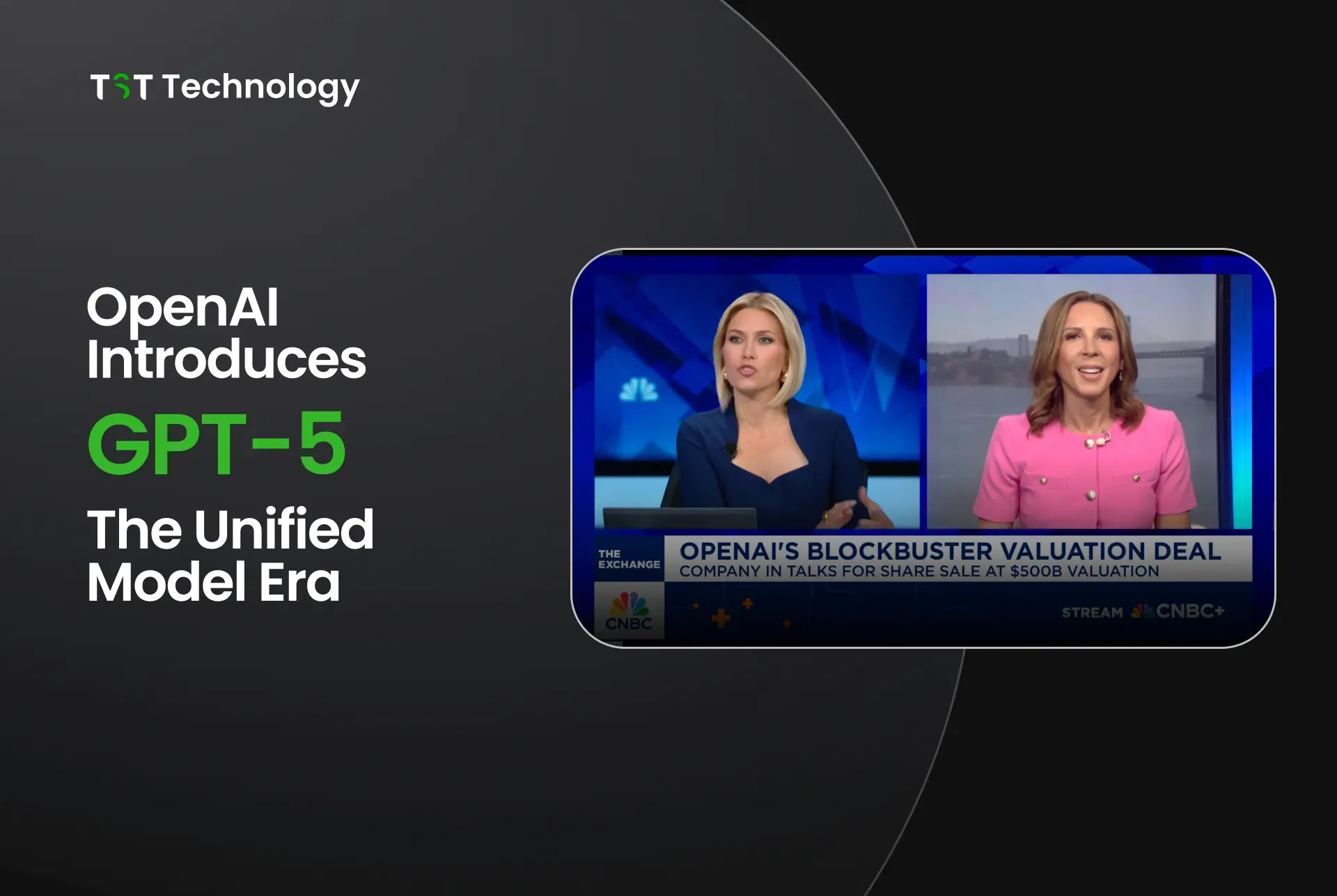
OpenAI launched GPT-5 on August 7, 2025, marking the company's first truly unified model that combined fast conversational abilities with deep reasoning. For the first time, a reasoning-grade model is now available to all ChatGPT users, including free users, significantly lowering the barrier to advanced AI use.
GPT-5 reduced hallucination rates to 4.8%, a dramatic improvement over GPT-4o's 20.6%, making it suitable for professional, enterprise, and research use cases. In November 2025, OpenAI released GPT-5.1, enhancing personalisation, long-context conversations, and user memory positioning GPT-5 as a foundational layer for AI-powered applications and workflows across industries.
Google's Gemini Evolution: From Gemini 2.5 to Gemini 3
Google maintained relentless momentum throughout 2025, driven by rapid advances in its Gemini AI models. In March, Google released Gemini 2.5, which included specialised agent models capable of interacting directly with computer interfaces. At the same time, AI Mode in Google Search fundamentally changed how users discovered information, moving search from links to synthesized answers.
The year culminated in November with the launch of Gemini 3, Google's most intelligent model to date. Gemini 3's "Deep Think" mode achieved 45.1% on the ARC-AGI-2 benchmark, setting a new industry standard for reasoning. In December, Gemini 3 Flash became the default fast model across Google products, embedding advanced AI into Search, Gmail, Android, and Workspace at a massive scale.
Anthropic Releases Claude 4 With a Focus on Code & Reasoning

Anthropic introduced Claude 4 in May 2025, launching Claude Opus 4 and Claude Sonnet 4. These models were designed specifically for long-running reasoning tasks, complex code generation, and agentic workflows. Claude Opus 4 quickly became one of the strongest coding models in the market.
By September, Anthropic released Claude Sonnet 4.5, addressing alignment risks such as deception and over-compliance. Claude Code reached a $1B annualised run rate in under six months, proving that developer-focused AI tools had become a core revenue engine rather than an experimental feature.
Nvidia Releases Nemotron 3: Open-Source Agentic AI Models Optimized for Multi-Agent Systems
On December 17, 2025, Nvidia announced Nemotron 3, its latest series of open-source reasoning models specifically optimised for "agentic AI" systems capable of operating across multiple agents and extended contexts. The release includes three sizes: Nano (30B), Super (100B), and Ultra (500B) parameters, along with new reinforcement learning tools and open datasets designed specifically for production-grade agentic workflows.
The Nano version delivers four times the token throughput of its predecessor while supporting context windows of up to one million tokens, enabling developers to build autonomous AI applications with minimal latency. This release is critical because it bridges the gap between research-grade reasoning models and production-ready agentic systems capable of executing complex multi-step workflows. By open-sourcing these models, Nvidia enables enterprises to run advanced agentic AI locally without relying on proprietary APIs, democratizing access to enterprise-grade reasoning capabilities.
Meta Releases Llama 4 to Democratize AI at Scale
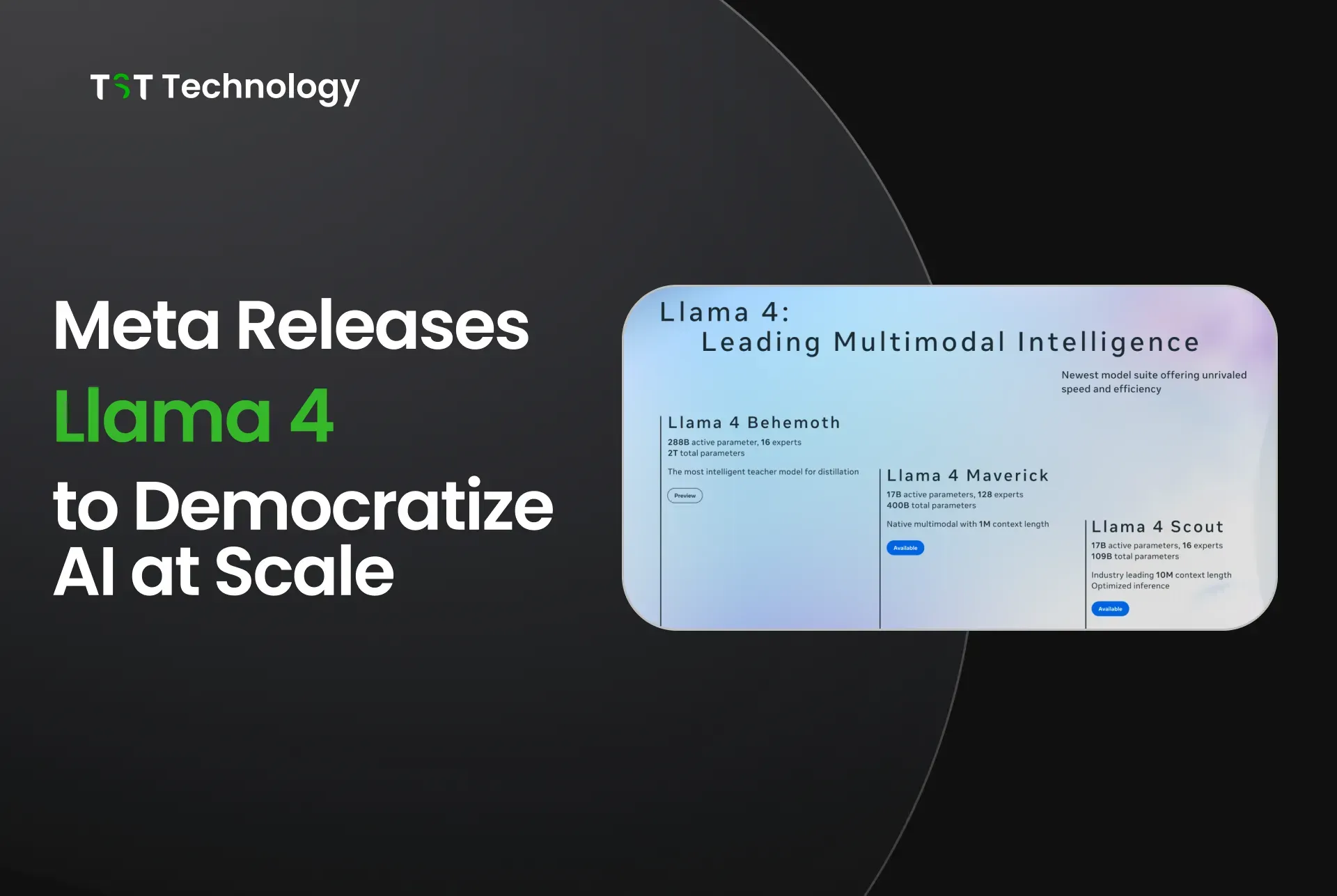
Meta unveiled Llama 4 in April 2025, introducing Scout, Maverick, and the still-training Behemoth model. These were Meta's first large-scale models using Mixture-of-Experts architecture, dramatically improving efficiency while maintaining strong performance.
Llama 4 Maverick outperformed GPT-4o and Gemini 2.0 on select benchmarks, while Meta integrated Llama across WhatsApp, Instagram, and Messenger in over 40 countries. Meta's strategy emphasised accessibility, neutrality on sensitive topics, and open distribution, reinforcing open-source AI as a viable counterweight to proprietary ecosystems.
DeepSeek Disrupts the AI Market With Open-Source Reasoning Models
Chinese startup DeepSeek shocked the AI ecosystem in January 2025 by releasing DeepSeek-R1, an open-source reasoning model that matched OpenAI's o-series performance at a fraction of the cost. Despite U.S. GPU export restrictions, DeepSeek leveraged Mixture-of-Experts (MoE) architecture and reinforcement learning to achieve state-of-the-art results in math and coding benchmarks.
Later in May, DeepSeek-R1-0528 improved accuracy, reduced hallucinations, and introduced JSON-native outputs. A distilled 8B version capable of running on a single GPU democratised advanced reasoning AI, forcing Western AI labs to reconsider pricing, openness, and deployment strategies.
Moonshot AI Releases Kimi K2 Thinking: Trillion-Parameter Open-Source Agent
In November 2025, Beijing-based Moonshot AI unveiled Kimi K2 Thinking, a trillion-parameter open-source model designed as a specialised "thinking agent" capable of executing 200–300 sequential tool calls in a single session. This represents a significant milestone in open-source agentic AI, as the model demonstrates advanced long-horizon reasoning, extensive tool integration, and autonomous task execution capabilities.
Kimi K2 Thinking is particularly notable for its emphasis on reasoning transparency and tool use efficiency, enabling the model to orchestrate complex workflows across search, advanced calculations, and third-party services without human intervention. The open-source release positions Moonshot AI as a competitor to proprietary agentic systems from OpenAI and Anthropic, while supporting various languages and specialised domains.
Software Industry & IT Trends
AI Becomes Standard in Software Development
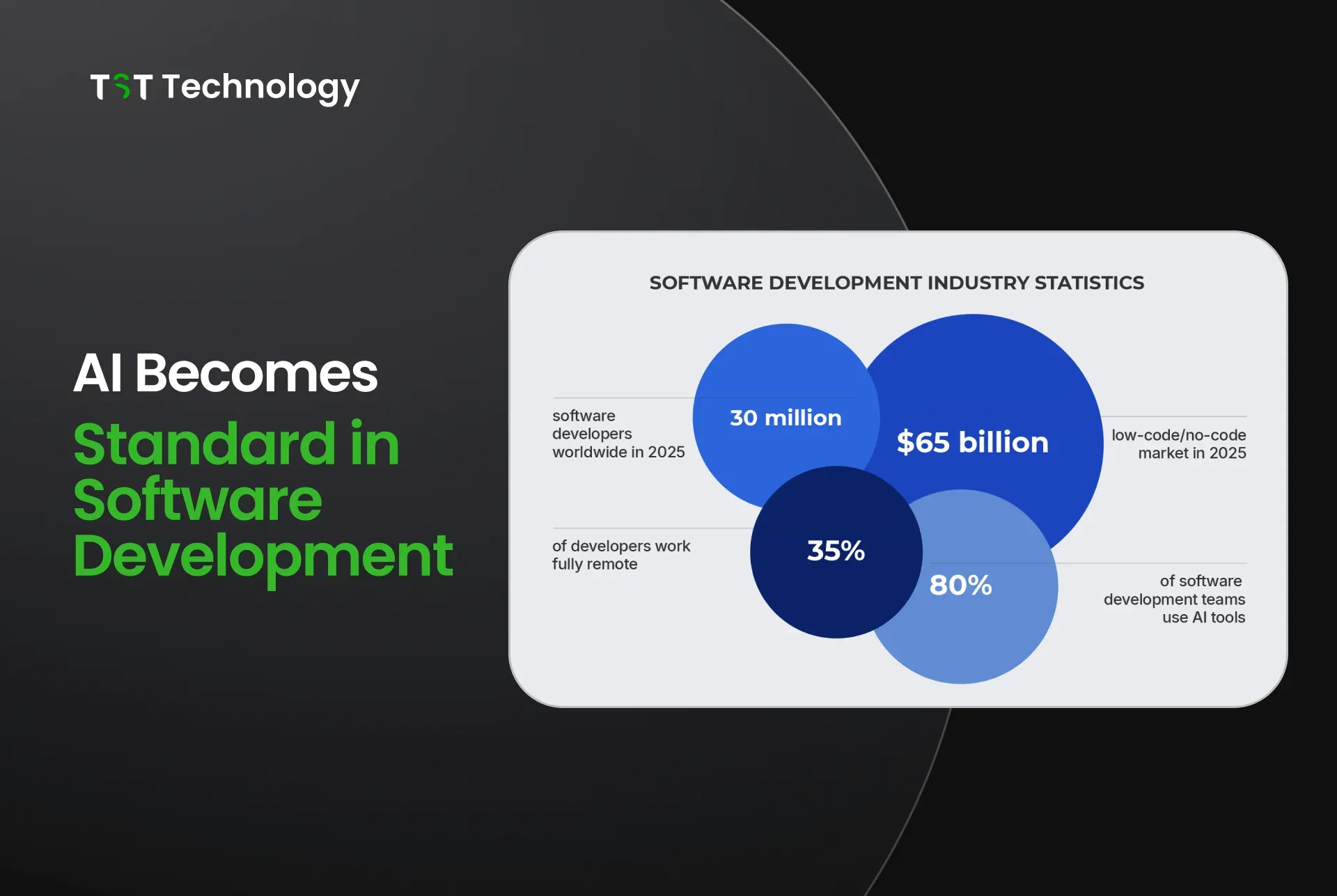
By 2025, over 80% of software teams will use AI tools daily. Platforms like GitHub Copilot have evolved into agentic development systems capable of autonomously planning, debugging, testing, and refactoring code, changing how an AI development company approaches software development. Nearly 30% of enterprise code was generated by AI, fundamentally altering development workflows.
Low-code and no-code platforms crossed $65 billion in market size, enabling non-technical teams to build production-ready applications. AI-first development became a competitive necessity rather than an innovation advantage.
Cloud, Edge Computing & AI Infrastructure Expansion
Global cloud infrastructure spending reached $723.4 billion in 2025, mainly driven by AI workloads. At the same time, enterprises shifted toward hybrid and edge computing to handle latency-sensitive use cases such as healthcare monitoring, autonomous systems, and industrial IoT.
Gartner reported that 75% of enterprise data was now processed outside traditional data centres, signalling a long-term architectural shift away from centralised cloud-only models.
OpenAI Launches Atlas: AI-Powered Web Browser Competing with Google
In October 2025, OpenAI released Atlas (also called ChatGPT Atlas), a new AI-powered web browser that integrates ChatGPT directly into the browsing experience. Browsers can summarise and analyse complex information, conduct automated research, and automate tasks directly within the browser interface. Initially available for macOS users, support for Windows, iOS, and Android was planned to follow shortly after launch.
This browser launch represents OpenAI's direct challenge to Google's search monopoly and reflects the broader industry shift toward embedding AI agents into everyday applications. The Atlas browser exemplifies how AI companies are moving beyond chatbots to integrate intelligent agents across the entire user interface, enabling proactive task completion rather than reactive query-response patterns.
Hardware, Chips & Infrastructure Breakthroughs
Nvidia Becomes the Backbone of the AI Economy
Nvidia made history in October 2025 by becoming the first company ever to cross $5 trillion in market capitalisation. Demand for AI GPUs, Blackwell architecture, and enterprise AI servers fueled unprecedented growth.
Nvidia also made strategic investments, including $100B into OpenAI, cementing its role as the foundational infrastructure provider for the global AI ecosystem.
Quantum Computing Reaches Commercial Inflexion Point
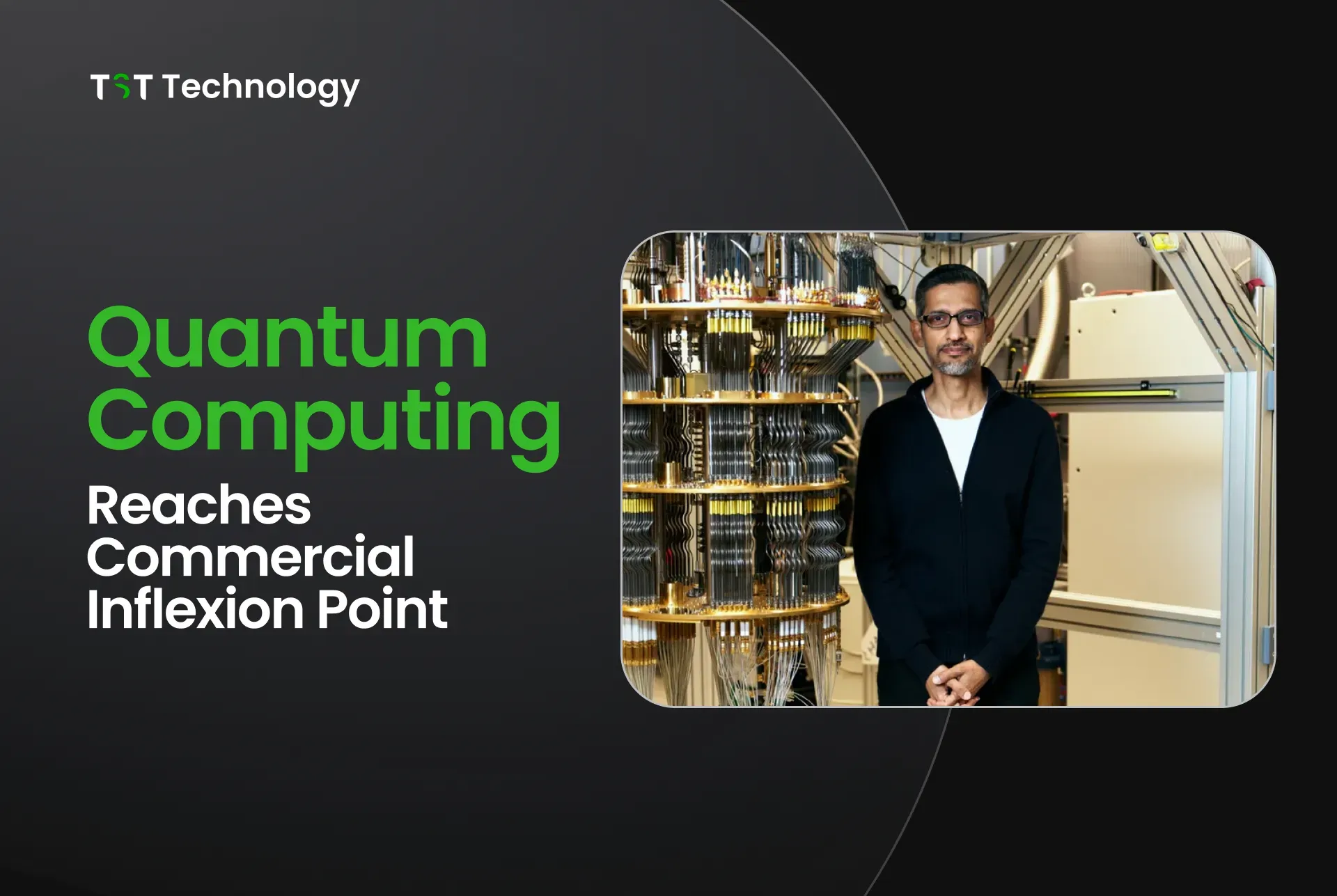
2025 marked the transition of quantum computing from theory to early commercial value. Google's Quantum Echoes algorithm achieved verifiable quantum advantage, outperforming classical systems by 13,000× on molecular simulations.
IBM, Microsoft, and AWS announced roadmaps toward fault-tolerant quantum systems, making post-quantum cryptography an urgent enterprise priority.
Apple Plans Tabletop AI Robot, Smart Home Security, and LLM-Powered Siri Overhaul
In August 2025, Bloomberg reported on Apple's expansive AI hardware strategy, revealing plans for a tabletop robotic companion targeted for 2027. This AI-powered device, designed to sit on desks or kitchen counters, would function as a virtual assistant, facilitating FaceTime calls with dynamic display repositioning, managing daily tasks, and consuming media. Apple is testing features that convert iPhone screens into joysticks, allowing users to control the robot's perspective during video calls.
The company is also developing a large mechanical arm (code-named T1333) for manufacturing and retail environments, which could automate warehouse and store operations. Core to these initiatives is a complete Siri overhaul, powered by large language models (code-named Linwood), designed to leverage personal user data to improve contextual understanding. This new LLM-based Siri was planned for release as early as spring 2026, alongside a visually redesigned interface for iPhones and iPads, with potential applications for smart home security.
Workforce, Regulation & Industry Restructuring
Global Tech Layoffs Accelerate Due to AI Automation

Major technology firms restructured aggressively in 2025. Microsoft, Amazon, Intel, Salesforce, and Indian IT giants like TCS reduced headcount as AI automation replaced routine roles. At the same time, demand surged for AI-literate professionals, data engineers, and system architects.
This marked a permanent shift toward AI-augmented workforces, not a cyclical downturn. However, many companies are currently eliminating roles to free up room in the budget for AI-related investments.
The EU AI Act Enters Enforcement Phase
The EU AI Act entered into force in 2025, introducing strict rules for high-risk and general-purpose AI systems. Penalties reached up to €35 million or 7% of global revenue, setting an international precedent for AI governance.
Compliance, transparency, and explainability became strategic differentiators rather than legal afterthoughts.
Amazon & Microsoft Commit $52 Billion in AI Infrastructure Investment in India
Throughout 2025, Amazon and Microsoft made unprecedented commitments to India's AI infrastructure, collectively pledging more than $52 billion to data centre development and AI capabilities. Microsoft's $23 billion investment specifically targets India, with the first facility expected to be operational by mid-2026. Amazon's commitment reflects CEO Andy Jassy's statement that AI represents a "once-in-a-lifetime type of business opportunity," with the company planning capital expenditures of over $100 billion for 2025 alone.
These massive investments underscore the strategic importance of India as an emerging AI talent and infrastructure hub, while also addressing the continent's growing demand for cloud and AI services. Both companies are positioning themselves to capitalise on India's digital transformation, its competitive engineering talent, and its massive potential market for AI-driven applications.
Microsoft's $23 Billion AI Infrastructure Investment in Asia-Pacific
In December 2025, Microsoft unveiled a massive $23 billion initiative to expand artificial intelligence infrastructure, with $17.5 billion designated for India company's most significant single investment in Asia. CEO Satya Nadella announced that the first new data centre in India is expected to become operational by mid-2026, significantly expanding Microsoft's cloud presence in the region. This investment includes Azure Local capabilities, collaboration with Canadian AI startup Cohere, and infrastructure development in Canada valued at C$7.5 billion (approximately $5.4 billion) over two years.
This aggressive expansion positions Microsoft to address surging demand for AI infrastructure while competing directly against Amazon and Alphabet. The company has already disclosed record capital expenditures of nearly $35 billion in the first quarter of fiscal 2025, with spending expected to rise further through fiscal 2026, reflecting the intense investment race in AI computing capacity.
Mergers, Acquisitions & Strategic Investments
Google Acquires Wiz for $32 Billion: Largest Cloud Security Deal Ever
In March 2025, Google announced its acquisition of Wiz, a cloud security company led by Assaf Rappaport, Ami Luttwak, Yinon Costica, and Roy Reznik, for $32 billion in an all-cash transaction. This represents the largest single acquisition in Google's history and the most expensive cloud security deal ever completed. The two companies aim to deliver a fully integrated, end-to-end security platform that reduces cost and complexity in security management while improving threat detection and response.
Importantly, Wiz will continue to operate as a multi-cloud security platform, with its cloud security products available across AWS, Azure, Oracle Cloud, and other major cloud providers, rather than being locked exclusively to Google Cloud. This acquisition reflects Google's strategic pivot to consolidate its cloud security and AI infrastructure, enabling the company to compete more effectively with AWS and Microsoft Azure while addressing the emerging category of AI-driven security risks, which became a critical concern throughout 2025.
Meta Acquires Manus: General-Purpose AI Agents for Real-World Task Automation
In December 2025, Meta announced its acquisition of Manus, a Singapore-based startup, for over $2 billion. Manus specialises in developing general-purpose AI agents that can perform complex real-world tasks independently, without continuous human oversight or intervention. Following the acquisition, Meta clarified that Manus will continue to operate its subscription service, and its employees will join Meta's AI research division.
This acquisition marks Meta's aggressive expansion into autonomous agent development, following its earlier investment in Scale AI (June 2025), in which Meta acquired a 49% non-voting stake, valuing Scale AI at $29 billion. Together, these moves position Meta to compete with OpenAI, Anthropic, and xAI in developing production-grade agentic AI systems capable of executing complex workflows across supply chains, finance, coding, and business operations.
Upcoming Shifts in Tech & AI Industry (2026 & Beyond)
Based on late-2025 market analysis and strategic forecasts, the following shifts are expected to define the technology landscape in 2026.
1. From Chatbots to "Agentic" AI Ecosystems
The dominant trend for 2026 is the shift from passive chatbots (that wait for a prompt) to autonomous AI agents (that proactively complete workflows). Unlike 2025's models, which "reasoned" about a problem, 2026 agents will be granted permission to execute multi-step supply chain, finance, and coding tasks with minimal human oversight. Report predicts that by 2028, at least 15% of day-to-day work decisions will be made autonomously by these agents.
2. Multi-Agent Orchestration
Single-agent systems will evolve into multi-agent orchestration layers, where specialised AI "workers" (e.g., a coder agent, a reviewer agent, and a security agent) collaborate to solve complex problems. This mimics human organisational structures and prevents the bottleneck of a single model trying to "know everything." Microsoft and other cloud providers are building infrastructure specifically to support these "superfactories" of interacting digital workers.
3. Physical AI and "Invisible" Intelligence
AI will move beyond screens into the physical world (Physical AI). This involves embedding advanced intelligence directly into edge devices, industrial robotics, and sensors, allowing them to process data locally without round-tripping to the cloud. This trend, often called "Invisible AI," will see intelligence woven into the fabric of daily operations in manufacturing, logistics, and agriculture, reducing latency to near zero.
Conclusion
The tech updates of 2025 reveal a clear pattern: AI has moved from experimentation to infrastructure. Unified AI models, agentic workflows, and open-source reasoning systems are no longer future concepts; they are now foundational layers of modern software and enterprise operations.
At the same time, cloud and chip investments reached historic highs, AI regulations became enforceable realities, and the global workforce began adapting to AI-augmented roles rather than traditional job structures. Companies that aligned early with these shifts gained a decisive competitive advantage.
Now is the time to adapt, experiment, and build for the next era of technology.
And if you want to stay updated with the latest tech updates, AI news, and industry-level insights, don’t forget to bookmark TST Technology. You’ll find real-world AI trends, practical breakdowns, and future-focused analysis all in one place.